
Roofing materials and costs
Rubber Roofing Cost
Last updated October 14, 2026 · Method · Corrections
Enter measured dimensions to calculate roofing quantities.
Name the exact EPDM system before comparing quotes. Membrane material, installation and full removal-and-replacement packages are different price bases. Deck, insulation, edge details and drainage can be separate. A general rubber label should not mix TPO, PVC or rubber-like shingles into one rate. Use a matching dated complete quote in the estimator and keep unknown work visible instead of choosing whichever source row gives the smaller total.
Sections13
- Rubber roofing cost: define EPDM separately
- Rubber roofing cost: dated guide context
- Measure net roof surface
- Removal and recover scope
- Deck, insulation and recovery layers
- Seams, edges and openings
- Drainage and condition limits
- Compare EPDM with TPO and PVC
- A compatible budgeting record
- Sources and update limits
- Use the EPDM guide rate or a project package
- Frequently asked questions
- Verdict: keep the exact rubber membrane and scope
Rubber roofing cost needs to name the actual membrane. EPDM is a rubber membrane family, while TPO and PVC are different materials despite sometimes appearing in broad rubber-roof cost guides. HomeGuide's April 19, 2024 guide lists EPDM at $3.50 to $10 per square foot installed, with broader replacement-component totals elsewhere. Keep those scopes distinct.
Rubber roofing cost: define EPDM separately
GAF's single-ply comparison distinguishes EPDM from TPO and PVC. EPDM is a rubber membrane; the others have their own chemistry and seam systems. A similar low-slope use does not make their products interchangeable.
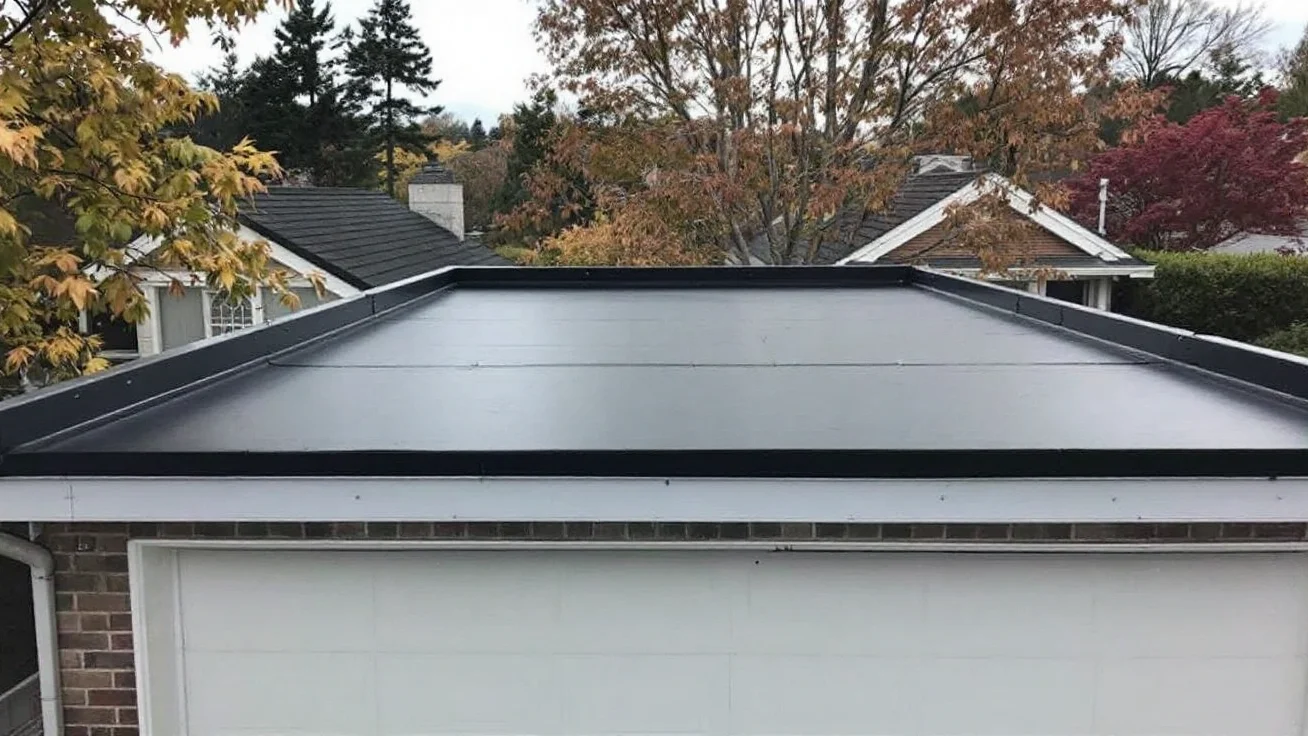
The exact EPDM product, thickness and attachment belong in the quote. A generic black-roof photograph cannot show the material or kept layers. This guide claims no inspected roof or hands-on test and gives no seam or attachment instructions.
Rubber-like molded shingles are another covering. Do not apply a membrane source to them because a broad product description mentions rubber. Material identity and assembly must match the source before a square-foot range can enter a budget.
Rubber roofing cost: dated guide context
HomeGuide's rubber-roof guide displays April 19, 2024, checked October 14, 2026. Its EPDM price comparison row gives $3.50 to $10 installed, while a replacement breakdown includes removal and other components and reaches a different total. Those are not one guaranteed complete-project band.
| Price basis | How to use it |
|---|---|
| Membrane material | Exact product and installed coverage only |
| Broad EPDM installed row | Older category context with scope limits |
| Replacement-component table | Different included tasks; reconcile before use |
| Compatible current quote | Exact complete package and exclusions |
Scroll for more →
The calculator offers the dated EPDM guide rate. Its subtotal still leaves unstated layers and details open. A matching project package can replace that rate. The older source date remains visible. No inflation or regional adjustment makes it a current local quote.
HomeGuide has a contractor-referral interest. Its cost data is not a bid survey collected by this site. Use the exact source and scope when citing a source. Do not mix the low endpoint of one row with the high endpoint of another to invent a new package range.
Measure net roof surface
Use sloped surface from a reliable report or a matching measured plan. A roof called flat can still have drainage slope. The roofing calculator accepts a known surface without inventing pitch or using indoor floor space.
Separate the EPDM section from other coverings. A main shingle roof and low-slope porch should not receive one averaged rate. The total property area can be kept for source. But each material zone needs its own scope and cost basis.
Roll area is a supply purchase count. Laps and details affect installed coverage. Do not divide surface by gross roll area and treat it as an exact order without the system's basis. An installed surface-area quote should not receive that purchase allowance again.
Removal and recover scope
A recover keeps stated old layers. Full replacement removes the stated assembly first. GAF's recover discussion names system-exact conditions, not blanket permission to keep every old roof.
The quote should show kept layer condition and fit. A new membrane does not make wet or damaged material sound by assumption. Keep that condition work outside the known subtotal until its scope and price are shown.
Roof tear off cost supplies removal scope checks. Ordinary old-covering removal and a complete EPDM package are different tasks. Add removal only when excluded from the base; reconcile haul-off and disposal charges instead of counting them twice.
Deck, insulation and recovery layers
The membrane sits within a layered assembly. GAF's low-slope overview names deck, insulation and cover-board functions. Those layers should not be treated as the same material line.
Ask which layers stay and which are new. Retained insulation needs its actual condition basis. New insulation needs a stated count and scope. A sheet-only membrane price does not show either. Keep them included, distinct or unknown in the project price comparison.
Deck repairs stay conditional until the deck is exposed. Roof decking replacement cost keeps checked sheathing and framing work distinct. The EPDM area does not show the damaged count or a shared repair allowance.
Seams, edges and openings
EPDM seams and attachment follow its exact maker's system. They do not inherit TPO or PVC methods. The current product and assembly records belong with the quote. This page gives no adhesive, joining or installation recipe.
Walls, perimeter edges and penetrations need stated detail treatment. A field membrane rate can leave unusual junctions outside. Record what is renewed and what stays. A total square-foot rate does not prove shared inclusion at every curb or opening.
If a quote keeps old flashing or another detail, compare that scope with one that renews it. The price gap can reflect more than the membrane. Preserve the actual tasks instead of attributing the whole gap to EPDM versus another material.
Drainage and condition limits
A new membrane does not show that the existing roof drains correctly. Local low spots or outlet conditions need an actual check. A tapered layer or drainage alteration needs its own measured scope. The calculator supplies no standard drainage surcharge.
Keep the cause of existing leaks distinct from the selected material. Water entry can involve a seam, detail or base condition. A price worksheet cannot diagnose it. The quote should name the known issue and the actual work intended to resolve it.
The flat roof cost guide shows the wider assembly record. A roof label and surface number alone cannot settle system fit, access or kept-layer condition. Unknown should remain a clear status, not be silently turned into zero.
Compare EPDM with TPO and PVC
TPO roofing cost and PVC cost use their own system record. Compare the same deck, insulation and detail scope. Similar roof area does not mean identical materials or attachment.
The published category bands have dates and exclusions. They do not forecast maintenance or energy savings for a home. This site supplies no shared lifetime-price winner. A complete current quote is more exact than a broad guide row and should carry its own stated basis.
A compatible budgeting record
Put measured EPDM area beside the exact membrane and assembly. Record removal or recover, kept layers and new work. Mark edges, openings, disposal and fees included, distinct or unknown. Only then enter a matching package in the replacement estimator.
Use one supply and labor package or genuinely distinct component rates. Do not add installation labor again when it is already included. Do not create a missing component rate by splitting a lump total with a guessed share. The known subtotal should keep any unpriced conditions.
Sources and update limits
HomeGuide supplies older cost context; GAF supplies membrane-family and assembly context. Sources were checked October 14, 2026. The method page records the unit and scope rules. No field test, contractor identity or completed job is claimed by these references.
Use the EPDM guide rate or a project package
The calculator's EPDM choice uses the dated rubber-roof guide. EPDM identity alone does not name thickness, attachment or the layers beneath. Check those fields in a complete roof quote. A new sheet over kept layers has a different scope from full removal. Keep that distinction with the price, and enter a current matching package when available.
Frequently asked questions
What is rubber roofing?
The term can be broad, so name the actual product. This page uses EPDM for the rubber membrane family and keeps TPO, PVC and molded shingles distinct. The exact system's records show material and attachment. A similar roof color or low-slope use cannot supply a matching cost rate or count specification.
What determines the rubber roof price?
The exact membrane, measured surface and complete work scope define the budget. Removal, insulation, deck conditions and junctions can be separate. The cited older guide uses other totals for other scopes. Keep each basis explicit instead of mixing endpoints or using a supply-only line as a complete replacement package.
Does EPDM cost include insulation?
The actual package should state that. The broad installed row does not show every layer and count for the project. Keep kept and new insulation named, with condition record where material stays. Do not add insulation again if a matching package already includes the same work, and leave unspecified amounts unknown.
Can I compare EPDM directly with TPO rates?
Only after matching the complete roof scope. Their products and seam systems differ, and cost-guide rows can include other tasks or dates. Use the same measured area, substrate and junction treatment. The material label alone cannot make two installed packages comparable or justify a shared price multiplier between them.
Verdict: keep the exact rubber membrane and scope
Use rubber roofing cost with EPDM named and source limits visible. Return to types of roofing materials and the replacement estimator with a matching dated package. Keep unknown layers and drainage work distinct.