
Roof replacement project
Winter Roof Damage
Last updated November 15, 2026 · Method · Corrections
After a storm, check the roof from the ground. Call a professional for snow on the roof and for any indoor leak or sign of sagging.
Sections5
After a storm, look for roof damage from the ground. Get professional help with roof snow, indoor leaks or a sagging roof.
How winter weather affects a roof
Snow stays on the roof until it melts, blows away or is removed. Its weight adds to the load carried by the structure. Snow can collect unevenly, especially where wind leaves a drift against a higher part of a roof. A deep drift deserves attention even when another roof plane looks nearly bare.
The Insurance Institute for Business & Home Safety winter guidance, published in 2022, lists creaking, a sagging roof, ceiling cracks, water stains and doors that no longer open correctly as signs of possible snow-load damage. A single sign does not tell you the weight on the roof or prove its cause. It does give you a reason to seek an assessment.
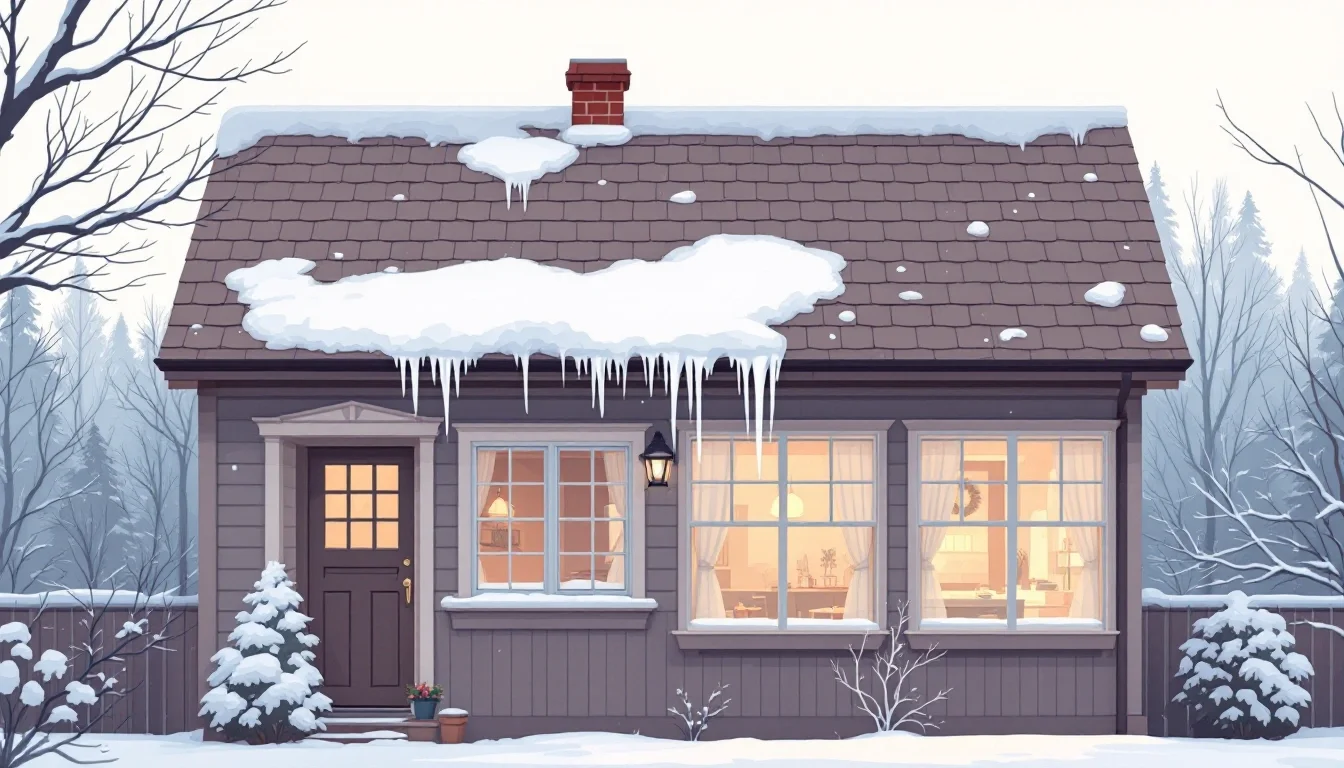
Ice can cause a different problem at the edge. The institute's ice-dam guide, published in 2018, explains that heat can melt snow higher on a roof. The water runs toward the cold eave and freezes. As the dam grows, it can hold water behind it. That water can get beneath shingles and enter the home.
Spot warning signs after a storm
Wait until conditions allow a safe look. You can gather useful information without walking on the roof. The institute's winter guidance recommends checking for snow-load damage after a storm and contacting a professional for roof snow removal.
- From the ground, look at each visible roof plane. Note large drifts, a change in the roof line, missing covering or a fallen limb. Stay clear of snow and ice that could fall from the eaves.
- Indoors, look for new ceiling cracks, stains or drips. Note doors that have begun to stick and any new creaking. Record where and when you noticed each change.
- If the roof sags or you suspect it could fail, leave the affected building and contact emergency services or the local building authority. Do not go back inside to investigate.
- For a leak without signs of collapse, move belongings away from the water and arrange an inspection. Keep away from wet electrical fittings and seek qualified help with that hazard.
- Photograph damage when safe and keep repair receipts. Contact your insurer about its process. A close view and a wider view can help show both the defect and its location.
A photo from the ground can show a missing piece, but it cannot show the full condition of the deck beneath the covering. Keep the observation separate from the diagnosis. A professional can inspect the roof and describe what is visible, what needs testing and what remains hidden.
For a closer look at trapped water and the signs near the eaves, read how to get rid of ice dams.
Handle snow and ice safely
The institute's ice-dam guide, published in 2018, advises using a snow rake from the ground. The Minnesota Department of Commerce ice-dam advice, published in 2021, suggests a professional snow remover when the work means getting on the roof or using a ladder, and a professional steam service for a dam causing indoor damage.
- Choose a place on firm ground outside the fall path of snow and ice. The institute's guide says to avoid areas where power lines enter your home.
- Pull down only snow you can reach safely. Work in small sections and avoid scraping the roof covering.
- Leave snow beyond safe reach to a qualified crew. Tell the crew about any sagging or other signs of strain before work starts.
- For a leaking ice dam, ask a professional about steam removal. Do not chip at the ice or spread chemicals on the roof. The Minnesota Commerce fact sheet warns that these methods can damage shingles and gutters.
There is no single snow depth in these sources that tells every homeowner when a roof is unsafe. Snow weight varies with its water content, and roofs vary in design and condition. Do not wait for a guessed depth if the structure shows signs of distress.
Deal with water inside
A bucket can catch a drip, but it does not stop water entering the roof. Tell the inspector when the leak happens: during rain, during a thaw, or both. Note whether it occurs near an outside wall, chimney or other roof feature. This record gives the inspector a starting point without assuming the water entered directly above the stain.
The Environmental Protection Agency mold guide explains that moisture control is the key to mold control. Its advice is to fix the water problem and dry wet materials promptly. It also notes that absorbent materials may need to be discarded if mold grows on them. Ask a qualified restoration professional to assess wet cavities and materials that cannot be dried or cleaned properly.
Keep a record of the leak and the work done. If a stain grows after the repair, tell the roofer when it changed. A mark left on a ceiling does not alone show that water is still entering; a new wet patch after a storm calls for another look.
Prepare before the next winter
- Have damaged shingles and flashing assessed while access is safe. Ask the roofer to identify the defect, the proposed repair and any areas that could not be inspected.
- Clear leaves and debris from gutters and downspouts before cold weather, or arrange help if access is unsafe. The institute's winter guidance includes this task.
- Review attic air leaks, ventilation and insulation if ice dams recur. The institute's ice-dam guide recommends proper attic ventilation, more attic insulation and sealing ceiling openings to keep warm indoor air from rising into the attic. Ask a qualified professional how these measures fit your roof assembly.
- If replacement is planned, ask how the proposal protects roof edges against backed-up water and how it handles flashing. The roof replacement process guide explains the parts to include in the scope.
- Keep the inspection notes, photos and written repair scope together. They make it easier to compare what was observed before and after the next storm.
Compare options in roof repair vs replacement.
Quick answers
Does every icicle mean the roof is leaking?
No. Icicles alone do not prove a leak. Look for a ridge of ice at the eave and signs of water inside, such as a new ceiling stain.
Can I judge roof load by snow depth alone?
No. Ask a qualified professional to assess a concerning buildup.
Should I chip ice off shingles?
No. Chipping can damage the roof.
Will a new roof stop ice dams?
Not by itself. The cause of melting snow also needs attention.
When should I document winter damage?
Document the damage when it is safe to do so.