
Roofing materials and costs
Metal Roof Durability
Last updated November 15, 2026 · Method · Corrections
Metal roofs resist cracking and can last up to 50 years or more, but hail, wind and corrosion can still cause damage. The roof's design, installation and care matter.
Sections6
A metal roof can last up to 50 years or more. Hail, wind and corrosion can still cause damage, and its design, installation and care affect its durability.
The U.S. Department of Energy's Building America guide says a metal roof can last up to 50 years or more. That is a possible service life, not a deadline or a promise for every house. Its guide also describes metal roofing as low maintenance. The roofing materials guide compares it with other coverings.
What makes a metal roof durable
Metal panels resist the cracking and shrinking described in the Insurance Institute for Business & Home Safety's low-slope metal guide. But the visible panels are only part of the roof. The deck below, fasteners, seams, flashing and underlayment must work together to keep water out.
A standing seam roof joins panels at raised seams. Other panels use exposed fasteners, while metal shingles come in smaller pieces. Their details and attachments differ. Ask for the exact product and the full roof system when comparing bids. A generic claim about metal does not tell you how a particular roof is attached.
The DOE guide names steel, aluminum and copper as common roof metals. They resist corrosion naturally or receive protection during manufacture. A finish and its condition still matter, especially where salt, trapped debris or damage exposes the surface. The material and finish should suit the site, including any coastal exposure.
A long-lived panel does not make every joint or layer last as long. The roof lifespan guide explains why age, condition and warranty terms answer different questions. Keep a record of the installed system and repairs so a future roofer can assess the actual roof.
Hail: dents and damaged finishes
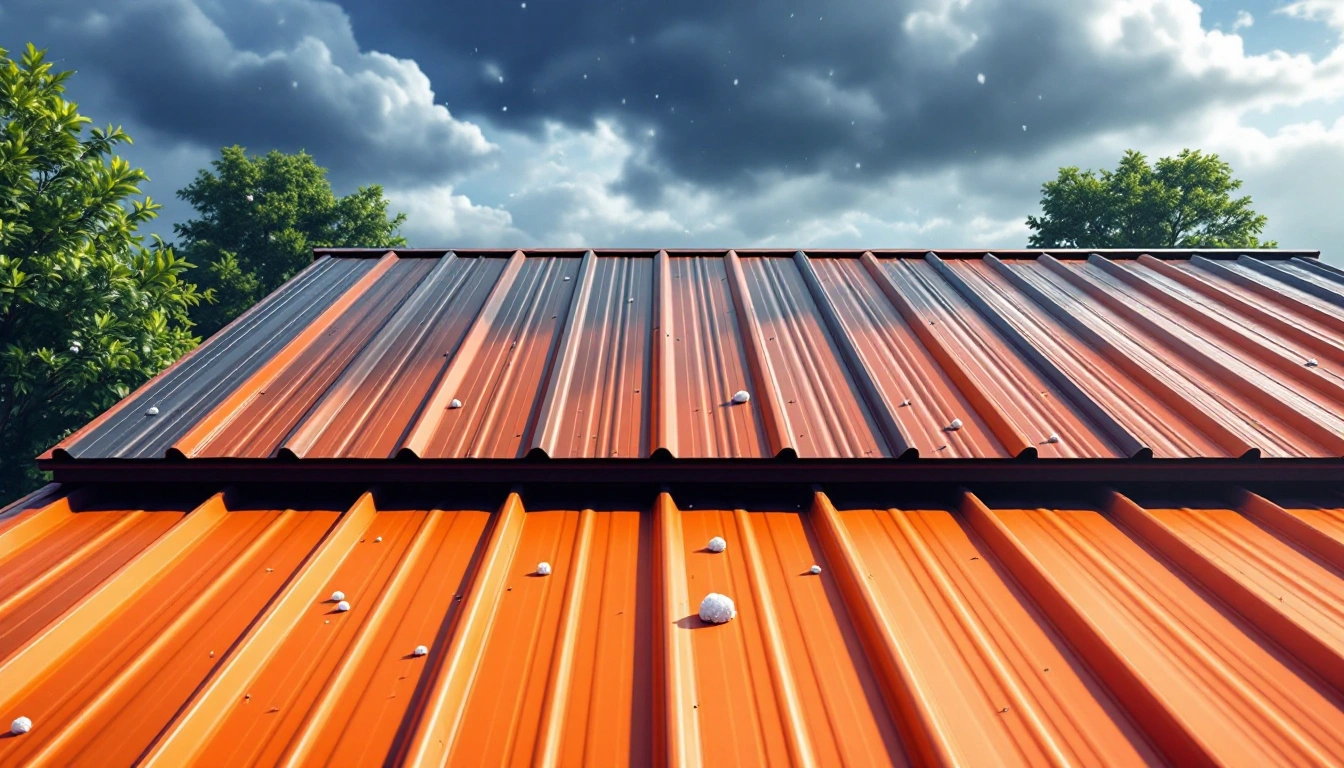
Hail can dent metal. IBHS research on roof weathering and hazards says it has seen dents in metal roofing, but currently has no evidence that dents alone affect its function. That finding does not mean every impact is harmless. The IBHS low-slope metal guide notes that damage to a panel's coating can allow corrosion.
A test rating helps compare products under stated conditions. In its roof guide, IBHS explains that UL 2218 uses steel balls to test impact resistance and assigns classes based on performance. The result describes a test, not a guarantee against dents or leaks in every storm. The report should identify the exact roof product and the test used.
After hail, use this sequence:
- From the ground, look for visible dents, displaced panels and damaged trim. Photograph what you can safely see.
- Check indoors for new stains or dripping and note their location. A stain alone does not show where water entered.
- Ask a qualified roofer to examine seams, penetrations and damaged coatings as well as the panel surface.
- Keep the assessment and photos with the warranty and insurance documents. Check how each handles cosmetic and functional damage.
Wind: the whole attachment matters
There is no single wind speed that applies to every metal roof. Wind pushes and pulls on different parts of a roof. The panel, clips or fasteners, deck and edge details all affect whether the assembly stays attached. IBHS notes that if wind removes a metal panel, a large area of deck may be exposed to water.
The IBHS roof guide says the whole roof system is tested, from the deck up. It gets a pressure rating for set conditions. Roof height, pitch and exposure matter. A number in an ad cannot show that a roof fits the needs of a home.
Before signing a contract, ask the roofer to:
- Name the proposed panel, deck, fasteners or clips and edge details in the quote.
- Provide the relevant tested assembly or product approval and its design pressures.
- Show how those pressures and the fastening layout meet local requirements for the home's location and roof shape.
- State how damaged decking and flashing will be handled if found during the job.
The standing seam cost guide helps compare the scope of that system with other quotes. A lower price is only useful when the work being compared is clear.
Fire: check the assembly rating
Metal itself does not burn. The IBHS low-slope metal guide says metal panels can have a Class A fire rating. Building rules may call for more fire ratings. The rating should cover the whole roof system, including the layers beneath the metal sheet.
Ask the roofer for the product's fire classification and the supporting listing. Check that the deck, underlayment and installation match that listing.
Moisture, rust and temperature
Steel can rust if its coating is damaged. Other metals can corrode too. The DOE guide says screws and other metal accessories should match or be chemically compatible with the panel. Standing water and debris also deserve attention. Near the coast, select corrosion-resistant material, as the DOE guide advises.
Metal expands and contracts as its temperature changes. The steep-slope metal guide describes allowing for thermal movement in the roof system. A roofer should use the attachment and joint details intended for the panel and its length. An improvised repair that locks a moving panel in place can create a new problem.
Snow and ice need their own site review. Consider how the roof shape, entries and walkways affect snow shedding and whether the proposed system needs snow retention. A strong covering does not remove the need to plan for snow moving off the roof.
The DOE guide also discusses ice dams in cold climates. Ask a roofer to check the attic air seal, insulation and ventilation as well as the roof covering. The right work depends on the roof and local climate.
Care and repair
Start with a view from the ground. Use a qualified roofer for work at height. Follow the product's care directions for cleaning and repairs. A matching panel and finish can help the repair fit the roof. Check how the work will seal joints and affect the warranty.
- Look at the roof after severe weather and during routine home checks. Note loose trim, debris, visible rust or changes at joints.
- Keep gutters and drainage paths clear. Arrange safe cleaning when debris cannot be reached from the ground.
- Record the date and place of any leak, stain or visible damage. Take photos from a safe position.
- Have a roofer identify the cause and quote the repair. The quote should address affected fasteners, flashing and underlayment.
- Keep the repair details with the original product and warranty records. Use the low-maintenance roofing guide to plan routine care.
A repair may address a local fault while the rest of the roof remains sound. If damage is widespread, a roofer can compare repair with replacement after checking the covering and the layers below it. Make that choice from the observed condition and written scope, rather than the age of the panels alone.
Quick answers
Can a metal roof dent without leaking?
Yes. A dent can change the roof's appearance without creating a leak.
Does a warranty cover every kind of storm damage?
No. Read the exact policy and roof warranty. They may treat dents, leaks, finish damage and installation defects differently.
Can a metal roof be repaired instead of replaced?
Often a damaged area can be repaired, but the right fix depends on the panel, seam and damage. Ask a qualified roofer to check the full affected area and provide a written scope.
Will a metal roof stop a house fire?
No. The roof covering is only one part of a home's fire protection. Embers can lodge on the roof, according to the DOE guide.