
Roof lifespan and replacement decisions
Roof Repair Vs Replacement
Last updated October 14, 2026 · Method · Corrections
Enter measured dimensions to calculate roofing quantities.
Compare the cause, extent and recurrence of defects. Neither a leak nor roof age alone proves that the whole roof needs replacement.
Sections9
- Roof repair vs replacement: scope before price
- Damage extent and recurring problems
- Condition and remaining service life
- Decision matrix with unknowns
- Compare repair and replacement proposals
- Replacement budget and proposal questions
- Evidence and limits
- Frequently asked questions
- Verdict on roof repair vs replacement
Roof repair vs replacement starts with the work, then the price. Repair fixes a known fault and keeps the rest of the roof. Replacement renews a larger area or the whole roof. Find the cause and how far it spreads before you compare those choices.
A local defect in an otherwise sound roof can justify repair. Wear across the roof may call for a larger job. So may a bad deck or leaks that keep coming back. A stain, roof age or photograph alone cannot choose the work. Keep uncertain conditions marked unknown, ask for the reason behind each proposal, and budget for replacement only when that is a realistic scope.
Roof repair vs replacement: scope before price
A repair quote and a replacement quote buy different work. One may address a failed pipe flashing. The other may remove the roof covering across all planes. Comparing the total alone does not tell you which addresses the actual cause or how much sound material each retains.
Begin with a short problem statement. Note the location, when you first saw it and whether it recurs. Keep the words factual. "Water appeared on the ceiling after rain" is an observation. "The whole roof has failed" is a conclusion that needs more evidence.
Ask each proposal to identify that cause and the intended result. If two proposals give different causes, ask what observation supports each one. A large price gap may mean the bids name different faults. They may also cover different areas or roof parts. Do not reduce it to a contractor being expensive without checking those distinctions.
The maker's Owens Corning repair-versus-replacement guide provides homeowner context. Manufacturer guidance is a useful starting point, but it does not inspect your home. Its general advice cannot certify that either scope fits the present roof.
Damage extent and recurring problems
Extent means how much of the roof is affected and how the areas relate. A single damaged detail may differ from the same symptom repeated across many planes. Record both the location and the distribution. A close picture without a wider view can hide that distinction.
Recurrence needs a timeline. A stain that remains after a repair may be an old mark. A mark that grows during later rain suggests new water entry, but still needs a cause established. Dates and photographs taken from the same safe indoor position can help show the difference.
Keep the original repair description if you have it. It may say a pipe boot was replaced or a flashing joint was addressed. Ask whether the new problem is at the same detail and whether the repair's stated cause was confirmed. Repeating a repair without resolving that question may repeat the uncertainty too.
Do not use a fixed repair-count rule. Two separate storms may call for two separate repairs. That differs from work on one leak that never stops. This guide does not establish that a certain number of visits means replacement is due. The cause and condition matter alongside the count.
Water can also reach an indoor surface from other sources. Plumbing leaks and moisture in an attic do not become roof-covering defects merely because the stain sits near a ceiling. A replacement proposal should explain how the source was traced before you assume new shingles solve it.
Condition and remaining service life
Age helps frame a question, but it does not supply remaining years. The way the roof was built matters. So does the weather it faces and the state of its parts. A warranty label describes contract terms. It cannot measure the state of flashings, fasteners or the roof deck.
Ask the assessment to distinguish covering wear from failure of a detail. Flashing directs water at walls, edges and openings. Underlayment sits beneath the covering. The deck forms the base. A defect in one part calls for a scope that explains how it will reach and address that part.
If the covering is broadly worn, a small repair may not address that wider condition. If most covering remains sound, removal of all of it needs a reason beyond one visible defect. These are questions to put to the scope writer, not diagnoses a homeowner can make from a street view.
The GAF warranty page sets out the product terms. Keep those terms separate from the roofer's promise about the work. A repair may affect a warranty; read the terms to find out. Do not assume every repair voids it.
Do not assume a new roof comes with cover for every cause of damage. Ask which risks each promise covers and which it leaves out.
You can plan around uncertainty without inventing years. Ask what evidence would make repair a sensible option, what might make it unsuitable and which areas were not accessible. Record those limits. A report that states what could not be checked is more useful than a confident service-life number without a basis.
Decision matrix with unknowns
| Observed or documented state | Scope worth assessing | What remains to establish |
|---|---|---|
| One known flashing defect; other areas assessed as sound | Targeted repair | Access, matching materials and whether the cause is fully addressed |
| Several leaks with the cause still uncertain | Further cause assessment before choosing work | Whether the leaks share a system defect or separate details |
| Broad covering deterioration documented across planes | Replacement scope | Area, deck condition, complete assembly and exclusions |
| Water stain only, no confirmed source | Cannot determine | Roof entry versus another water or moisture source |
| Unknown age, no installation record | Condition assessment | Product, assembly, repair history and actual wear |
| Sagging roofline or potentially falling indoor material | Prompt safety assessment; keep clear | Structural condition and safe access; a cost tool cannot decide |
Scroll for more →
No row turns a symptom into proof of a whole-roof failure. Several observations together may strengthen a case, but they still need a connection to the proposed work. Ask for that connection in writing. If the answer remains unclear, keep the decision state as cannot determine.
The matrix also separates urgency from scope. A local water-entry point may need prompt attention without calling for complete replacement. A broad but dry area of wear may give you time to plan. The person assessing current conditions needs to explain both the immediate response and the longer-term options.
Use the signs you need a new roof checklist to make a record from the ground or a safe indoor place. Do not walk on the covering or lift material. Stay out of an unsafe attic. Keep people away from any immediate hazard. This table cannot tell you if a structure is safe.
Compare repair and replacement proposals
Write down what each option retains. A repair may keep the existing covering, most flashing and the current ventilation. Replacement may still retain some of those details unless the proposal says otherwise. A heading that says complete replacement is not a substitute for a list of work.
Record what each option removes. Ask if the new-roof scope removes all old covering in that area. Check waste handling too. The repair bid should say how it reaches the fault it names. Ask for the boundary of the work, including neighboring details that may need disturbance.
Then record what happens if concealed damage is found. Ask what will be used and how it will be measured. Agree who must approve extra work. A deck allowance may cover a limited amount while leaving further work as an extra. That limit belongs beside the estimate, not in a forgotten footnote.
Keep product and workmanship promises in separate columns. Ask who provides each one and what evidence they need for a claim. A promise about installation may not cover damage from a later event. Read its limits. A product promise does not establish that the assembly was installed correctly.
Use the same area basis when you compare prices. A roof surface measurement differs from house floor area. A quote for one plane differs from a quote for the whole roof. Avoid converting a partial repair into a whole-roof per-foot price and treating it as a replacement rate.
Do not apply a universal threshold such as repair when its cost is below a fixed share of replacement. This site has no primary evidence for such a rule across roof types and conditions. A small cost can still buy work that misses the cause. A larger repair can sometimes keep a roof that still works.
Replacement budget and proposal questions
If a new roof is a real option, use the roof replacement cost estimator. It helps put the scope beside the budget. Enter measured roof surface or a valid footprint with known pitch. Select a rate that matches the material, place and scope. Treat the result as arithmetic, not confirmation that the roof needs replacing.
The built-in asphalt reference is a national guide range, and it does not establish that removal and disposal are included. Your proposal may use a different package. Check that before adding a separate tear-off amount. If deck repairs or permit costs are not established, leave them unknown rather than hiding them inside a guessed percentage.
An overlay is another scope, not a repair synonym. It adds covering over an existing roof rather than removing all old covering. It needs an assessment of suitability and its own pricing. Read reroofing vs roof replacement if that option appears in a bid.
Before choosing the work, ask these questions together:
- What is the documented cause of the problem?
- How much roof area is affected, and what was checked?
- What parts will this scope retain, remove and renew?
- What outcome does the proposed repair or replacement address?
- What condition remains unknown until work begins?
- How will extra work be documented, priced and authorized?
- Which warranty and workmanship terms apply to this scope?
Keep the response with the proposal and photographs. You can remove private contact details when using the worksheet. This site does not require an address, name or phone number to calculate a budget. It also does not inspect roofs, appoint contractors or make an insurance coverage decision.
Evidence and limits
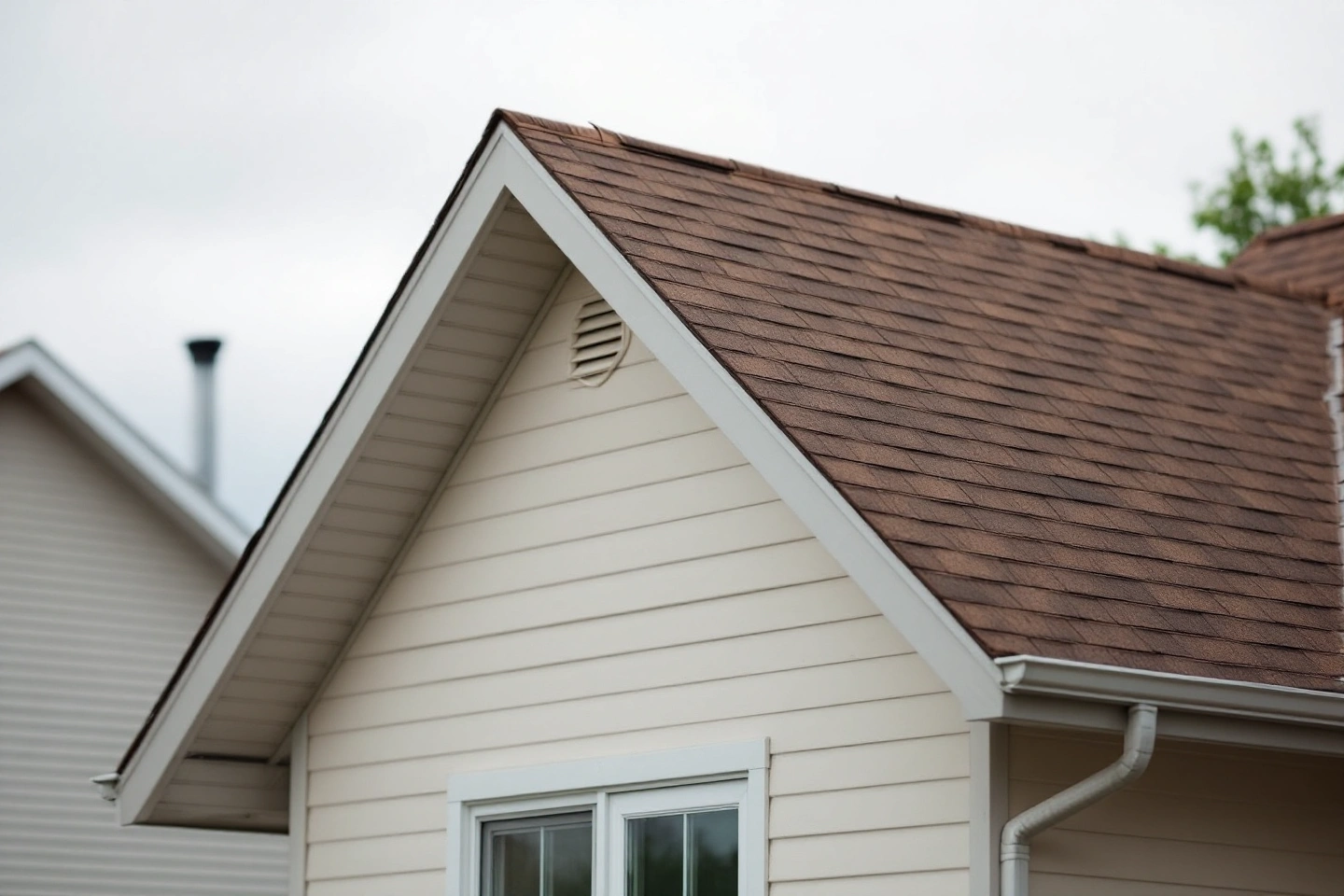
This page uses the makers' published guides. It compares what each job keeps and what it renews. Sources were checked on October 14, 2026. It does not use hands-on testing, a claimed contractor network or a history of inspecting homes. The roof photograph does not establish the condition of your own roof.
Storm performance is a separate question from present damage. IBHS shingle performance research compares performance under its described tests. A test result does not establish the cause of damage at a home or settle a coverage claim. Do not use a general rating as a remote assessment.
The guide to how long does a roof last explains age and warranty terms. The method and sources shows what the site knows and what it leaves open. Use Contact and Corrections to flag an error in a source or explanation.
Frequently asked questions
Does one leak mean I need a new roof?
No. A leak can arise at a local detail, or it can form part of a wider failure. The location and cause need assessment. Record when the leak appears and whether it recurs after work. A stain alone cannot establish the state of the covering, deck or whole roof system.
Should I replace a roof just because it is old?
Age helps with planning, but it does not prove the current condition. Use the installation record alongside an assessment of wear, leaks and roof details. Keep warranty labels separate from remaining service years. A budget can help you prepare while the scope decision remains open; it cannot settle that decision for you.
Is patching always a short-term choice?
The word patching can describe very different work. A defined repair that addresses a local cause differs from covering a symptom without finding it. Ask what will be repaired, why that work fits and what it retains. Avoid promises of a fixed repair lifespan without evidence for the exact roof and defect.
Can I compare a repair quote with the estimator's result?
You can compare the stated scopes, but the totals do not buy the same work. The estimator calculates a replacement budget from an area and rate. It cannot price or assess every local repair. Keep each proposal's area, inclusions and unknowns beside its total before making any decision from the difference.
Will replacing the roof settle an insurance claim?
This guide makes no coverage or claim outcome promise. A roof assessment, policy terms and a claim decision are different records. Do not interpret an estimate or a material rating as approval from an insurer. Keep evidence of the observed problem and ask the relevant parties to explain their own written decisions.
Verdict on roof repair vs replacement
Roof repair vs replacement needs a cause, extent and scope record. Ask which repair fits the known cause. If wear is spread across the roof, ask what needs to be renewed. Keep unresolved facts visible. A clear scope comes before a price comparison or a claim about remaining roof years.