
Roof replacement project
How to Get Rid of Ice Dams
Last updated November 4, 2026 · Method · Corrections
Rake reachable snow from the ground, call a steam crew for a leaking dam, then fix attic heat loss to prevent another.
Sections5
To get rid of an ice dam, rake the snow you can reach from the ground, then call a steam-removal crew if water is coming indoors or the ice ridge is large. Once the leak is controlled, fix the heat escaping into the attic.
Stay off the roof and out from under hanging ice. Snow removal reduces new meltwater; professional steam removal can release water already trapped. Neither fixes the cause. Seal attic air leaks, add the right insulation and keep the planned ventilation path open. New shingles alone will not stop a warm roof from melting snow.
What an ice dam is and why it forms
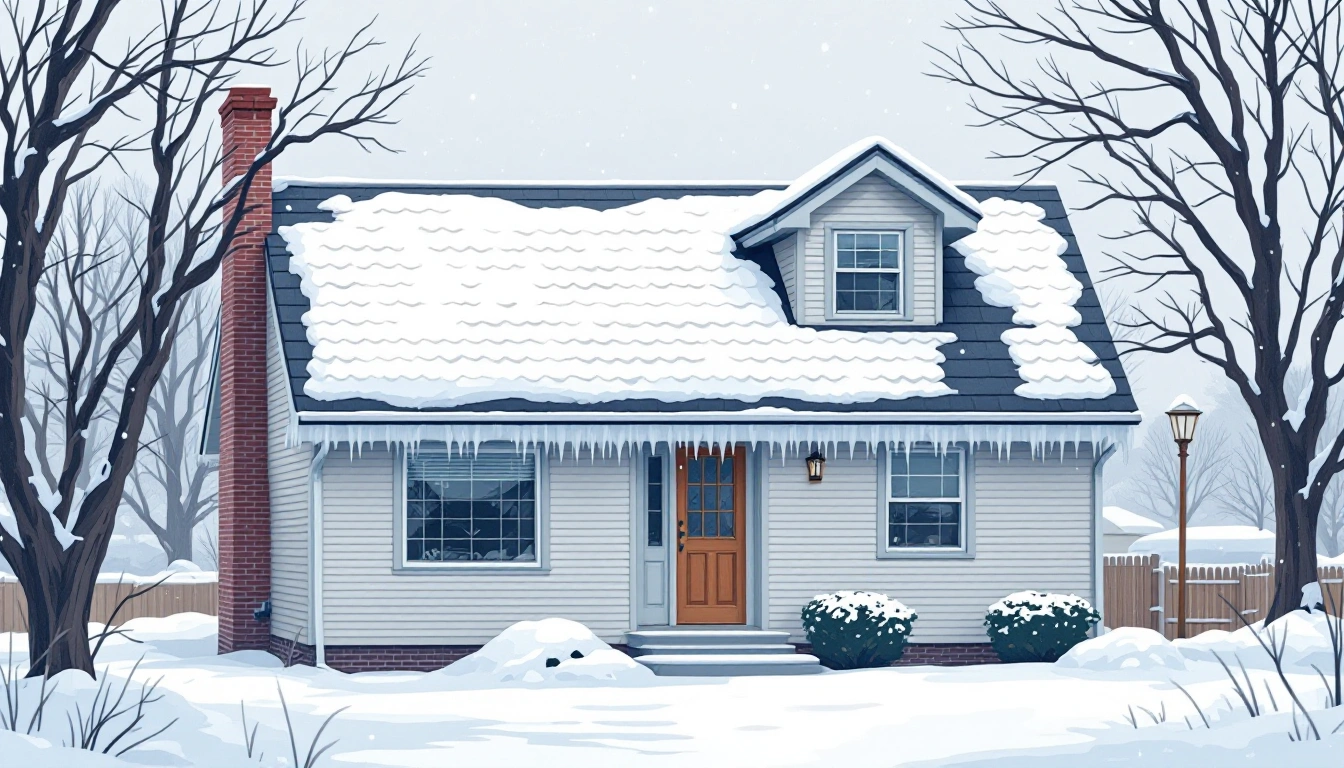
An ice dam is a ridge of frozen water near the roof edge. Snow melts on a warmer part of the roof, runs downhill and freezes at the colder eave. More meltwater reaches the ridge and pools behind it. Shingles shed water moving down the slope; backed-up water can find a path beneath them.
The University of Minnesota Extension ice-dam guide explains this warm-roof, cold-edge pattern. Heat escaping from the house is the main source; sunshine can also play a part. An eave projects beyond the heated rooms, so it can stay cold while the roof above the home warms.
Warm air can escape around an attic hatch or through gaps for pipes and wiring. Heat also moves through thin or missing insulation. Snow on the roof helps hold that warmth in. The result may be a bare patch higher up, with a thick white ridge below it.
Signs and damage to watch for
Look from the ground for ice along the eaves, uneven snow cover and water running behind gutters. Icicles can occur without an indoor leak, so they do not prove hidden damage. A growing ridge with water pooled behind it will leak once the next thaw adds more runoff.
Inside, record new ceiling stains, damp wall tops or water near an outside wall. Water may travel before it appears, so the stain need not sit beneath the entry point. Damp insulation, peeling paint and wet wood can remain after the visible ice is gone.
The National Weather Service's ice-dam explanation describes damage from water trapped behind the dam. Move belongings away from drips. Keep clear of a sagging ceiling or water near electrical fittings. Stopping the leak and drying wet materials are separate jobs; the thaw does not dry a closed roof cavity.
How to get rid of ice dams safely now
Remove reachable snow from the ground
Use a long-handled roof rake designed for the covering. Work from firm ground, away from power lines and falling snow. Pull small amounts down the slope without scraping the shingles bare. Stop if the reach or falling snow puts you at risk.
Removing snow cuts the supply of water feeding the dam. It does not mean the ice ridge will vanish at once. Do not climb a ladder onto a snowy roof to reach a patch beyond the rake. That is the point to bring in a crew with safe access equipment.
Leave a leaking dam to a steam-removal crew
Arrange removal when water keeps entering, the dam is large or the roof cannot be reached safely. The Minnesota Department of Commerce's ice-dam advice, published in February 2021, recommends a professional service using steamers when a dam is causing indoor water damage. Ask the crew how it will protect the shingles and keep people clear of falling ice.
The Minnesota Commerce ice-dam sheet warns that chipping, chemicals and heat can damage shingles and gutters. Both Commerce sources treat professional steaming as the one exception, used only for a dam that is already causing a leak. Leave chemical sleeves off the roof.
How to stop ice dams coming back
Seal attic air leaks before adding insulation
Start at the boundary between the warm rooms and a vented attic. Seal gaps around wiring, pipe openings, wall tops and the attic access. Bath and kitchen exhaust ducts should discharge outdoors rather than add warm, damp air to the attic. Keep the planned vent openings open.
The DOE guide to air sealing existing attics puts sealing before insulation. Large openings need solid blocking. Hot flues need metal blocking and suitable clearances; ordinary foam is not a substitute. Finish that work before new insulation covers the attic floor.
Match insulation to the climate and existing layer
R-value measures resistance to heat flow. The DOE Energy Saver Consumer Guide to Home Insulation, issued in 2021, gives these suggested ranges for an uninsulated attic:
- Climate zone 1: R-30 to R-49.
- Zones 2 and 3: R-38 to R-60.
- Zone 4, including marine 4, and zones 5 through 8: R-49 to R-60.
These are the guide's retrofit ranges, not a claim about the code adopted where you live. Its table has a different column for attics with 3 to 4 inches already present. Check the existing material and R-value before choosing what to add. Keep insulation clear of vents with baffles where needed.
Keep the intended ventilation path clear
In a vented roof, air needs an open route from the intake to the outlet. Insulation pushed into the eaves can block that route. The Minnesota Commerce sheet warns that adding vents, including powered vents, does not eliminate ice dams. An unvented attic needs its own roof assembly design; do not convert it by cutting vents at random.
The DOE Building America ice-dam guide treats roof design together with air control and insulation. IBHS's Winter Ready checklist calls for attic insulation and ventilation. It also lists clear gutters as a pre-winter task.
Plan ice-and-water shield when reroofing
An ice barrier beneath the shingles helps resist backed-up water. It does not prevent snow from melting. Ask the roofer to state in the proposal how far up the roof the barrier will run, alongside the heat-loss work.
Goodhue County's residential roofing handout cites R905.1.2 and describes protection from the roof edge to at least 24 inches inside the exterior wall line. This is a primary example of the requirement. Your adopted code and local amendments decide what applies; measure from the wall line, not just the gutter.
Keep heat cables as a last resort
Heat cables make meltwater channels; they do not correct attic heat loss. Natural Resources Canada's roofs and attics guide notes their energy use and limited relief. Consider them only after the underlying causes, drainage route and roof compatibility have been assessed. Install them before the first snow.
Verdict: when the roof itself needs work
Knowing how to get rid of ice dams does not settle whether to replace the roof. After the thaw, check damaged shingles, flashing and wet decking. Use roof repair vs replacement to compare a local repair with wider work, and the signs you need a new roof checklist to record wear. If replacement is needed, include the ice barrier and attic work in the roof replacement process.
Quick answers
What is the fastest way to get rid of an ice dam?
For a large dam or an active leak, call a crew that uses steamers made for roof ice removal. From the ground, a roof rake can remove reachable snow that feeds the dam. Stay on the ground while waiting for the crew.
Can I use rock salt on my roof?
No. Keep rock salt off the roof. Minnesota Commerce warns that chemicals can damage shingles and gutters. For a dam that is causing an indoor leak, it recommends a professional service using steamers. Removing the ice gives short-term relief; fixing attic heat loss helps prevent another dam.
Do clean gutters prevent ice dams?
Clean gutters help water drain, but an ice dam can form at a cold eave even without a blocked gutter. Heat loss through the roof melts snow farther uphill. That water freezes again near the edge. Keep gutters clear, then address attic air leaks, insulation and the roof's ventilation path.
Will more attic vents solve the problem?
More vents alone will not stop warm air leaking through the ceiling. In a vented attic, keep the designed airflow path clear and seal leaks from the rooms below. Powered vents do not eliminate ice dams either, so a new fan is not the fix. An unvented roof needs a different insulation and moisture plan.
Does an ice dam mean I need a new roof?
No. Sound shingles can leak when water backs up behind ice. After the thaw, check for torn shingles, failed flashing and wet roof decking. A local defect may need repair. Wider damage may justify replacement, but the work must also address the heat loss that caused the dam.