
Roof replacement project
Roof Underlayment
Last updated November 8, 2026 · Method · Corrections
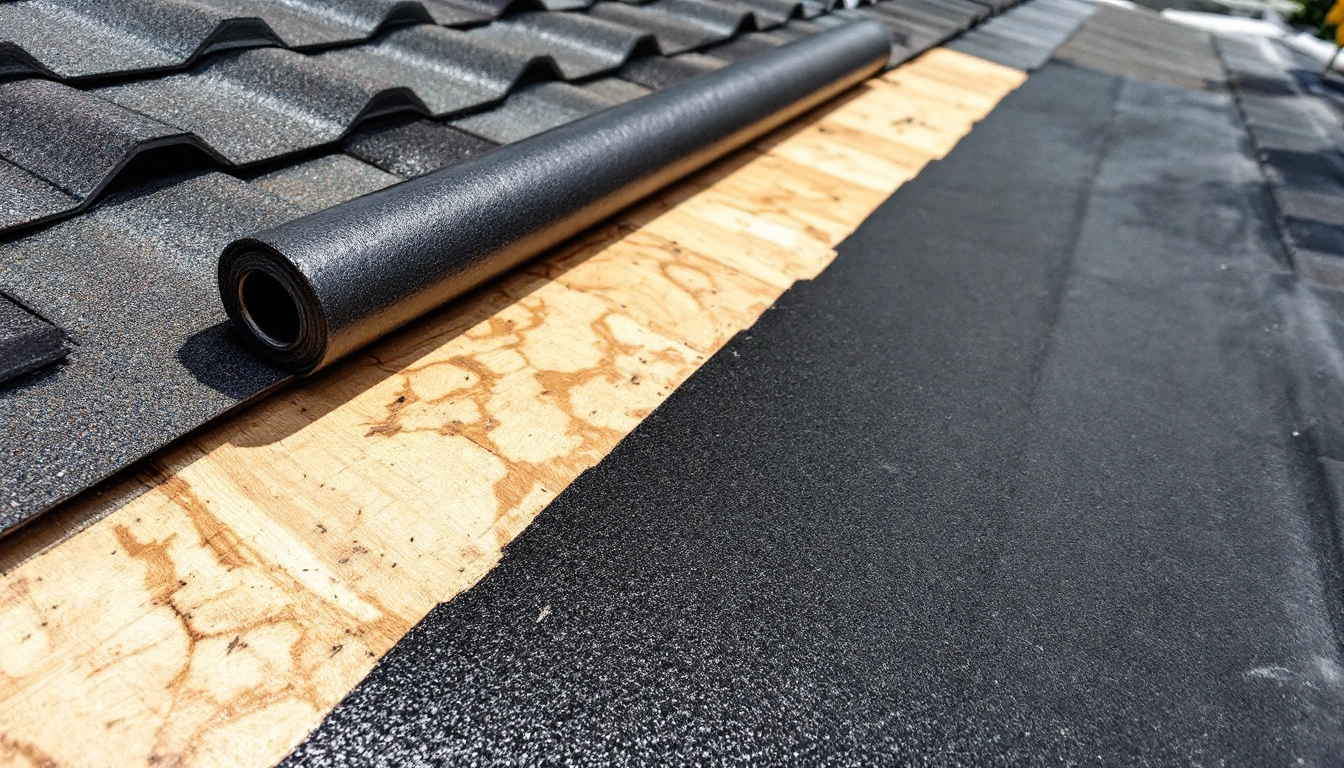
Roof underlayment is a sheet installed over the roof deck and beneath the outer covering. It adds a backup layer against water that gets past the covering. Felt, synthetic sheets and self-adhering membranes serve different assemblies. Choose the product and its coverage for the roof, climate and local code.
Sections7
Felt, synthetic sheets and self-adhering membranes are three main underlayment families for asphalt shingles.
The roof replacement process explains how these parts fit into a job. For an existing roof, old invoices and the proposed product sheet can help identify the layer without guessing from the outside.
What the layer does
The Asphalt Roofing Manufacturers Association (ARMA) bulletin, published in May 2025, describes underlayment beneath asphalt shingles. It provides another layer of water protection beneath the exposed covering. The deck is the structural base; the underlayment covers that base, and the shingles shed most rain above it.
Water can reach the layer through damage or gaps in the outer covering. Its path also depends on joints and details around the roof. Underlayment does not replace flashing, which directs water at places such as a wall, chimney or valley. A sound sheet cannot make a poorly detailed junction work on its own.
Underlayment also differs from the roof deck. The deck supports the roofing assembly; a sheet laid over damaged wood does not repair it. See roof decking replacement cost for how deck repairs are separated from the covering and other work.
Compare the common types
The bulletin groups steep-slope shingle underlayments into asphalt-saturated felt, synthetic sheets and self-adhering products. These families have different properties:
- Asphalt-saturated felt: A water-resistant sheet made with an organic felt base. Its material can absorb some moisture.
- Synthetic sheet: A non-asphaltic polymer sheet. Products vary in their properties and fastening requirements.
- Self-adhering membrane: A sheet with adhesive backing that bonds to the prepared base; some products are used as ice and water barriers.
Felt is a familiar option under asphalt shingles. Synthetic sheets are generally lighter and typically cover more area per roll than saturated felt. Suitability depends on the roof assembly. Ask for the named product and the standard it meets.
A self-adhering membrane is a method of attachment as well as a material choice. Some roofs use it only in vulnerable areas; others use it more broadly as part of a specified system. The right choice depends on the covering, deck, climate and how the roof manages moisture. Choose the sheet as part of the complete assembly.
Match it to the covering and climate
Asphalt shingles, metal and tile do not all use the same assembly. A proposal should name both the outer covering and the underlayment beneath it. It should also identify any separate barrier at eaves or valleys. A generic line saying “roofing felt” may not describe what is actually proposed.
For metal, the US Department of Energy's metal roof guide explains that condensation can form on the underside in cold or cooling conditions. It calls for a continuous underlayment to protect the sheathing if that occurs. The word metal alone does not establish which underlayment suits the assembly.
Tile work raises a separate access issue. Existing tiles may need to be lifted before a layer beneath them can be reached. The tile underlayment replacement cost guide separates that handling from the new sheet and explains why an underlayment-only price is not the whole job.
In cold climates, snow can melt and refreeze at the eaves. Water held behind the ice can back up under a covering. The Department of Energy's cold-climate eaves guide describes a self-adhered membrane at the eaves as a protective measure. Air sealing, insulation and ventilation also help reduce heat transfer that contributes to ice dams.
Roof slope and local rules
Slope is the rise of a roof over a horizontal run. A lower slope can change how water drains and which assembly is permitted. For asphalt shingles on slopes from 2:12 up to 4:12, the bulletin says building codes require two layers of mechanically fastened underlayment or one layer of self-adhering underlayment. Ask the roofer to identify each relevant roof plane and the assembly proposed for it.
Local building rules can change the required materials, attachment and areas covered by an ice barrier. The bulletin advises checking local codes and the shingle maker's requirements when selecting and installing shingle underlayment. The local building department can identify the code edition and amendments that apply to the address.
A roof in a wind-prone area may need a specific sealed-deck approach. The Department of Energy's roof deck guide describes several approaches, including a fully adhered membrane, or sheathing joints sealed with tape or membrane strips compatible with the sheathing and covered by underlayment. Each approach has its own assembly requirements.
What happens during replacement
A homeowner can use this sequence to discuss the work and its scope with the roofer:
- Identify the assembly. Record the roof covering, roof planes, proposed sheet and local requirements. Ask where any special barrier will go.
- Remove the stated old layers. The proposal should say whether the old covering and underlayment are removed and how debris is handled.
- Check the exposed deck. Ask how damage will be documented and how any repair will be priced before new layers cover it.
- Lay the specified system. The roofer installs the underlayment and integrates it with edges, valleys, penetrations and flashing as required for the assembly.
- Finish and document. The covering is installed above the specified layers. Keep the product names, locations, product and workmanship warranty terms, who provides them, and any change orders with the final invoice.
The precise laps, fasteners and edge details depend on the assembly. Ask for those details in the written scope, including how long the chosen sheet may remain exposed before the covering is fitted. A temporary delay in the job needs a weather-protection plan.
Repair versus replacement
A ceiling stain does not identify which layer failed. Water can travel from an opening or flashing defect before it appears indoors. Ask for the source of the leak and the area inspected, then compare a local repair with any proposed wider replacement. The condition of concealed material may remain unknown until it is exposed.
Underlayment is normally covered by the outer roof, so reaching it can mean removing and replacing some of that covering. The amount of covering that can be reused depends on the material and its condition. Keep removal, disposal, deck repairs, the new sheet, flashing and reinstallation clear in the quote.
A useful bid states the product, area and work included instead of applying a generic roll price to the whole job. Ask whether hidden deck work is included or priced separately, and how any added work will be approved.
Frequently asked questions
Can underlayment be left exposed instead of a roof covering?
Underlayment is part of a roof assembly. Check the product's allowed exposure period and the plan to cover it.
Does underlayment stop all roof leaks?
No. It is a backup layer, and its performance depends on the complete roof and its details. Flashing, drainage and the condition of the covering still matter.
Does a metal roof need underlayment?
Yes. A continuous layer protects the sheathing where condensation can occur.
How long does roof underlayment last?
No single lifespan applies to every underlayment. Its condition depends on the material, exposure and roof history, so age alone does not show it.
Can a homeowner see underlayment from the ground?
Usually the finished covering hides it. A proposal or prior roofing records can identify the specified layer, while an inspection during removal can reveal its condition.