
Roof replacement project
How to Remove Moss and Algae From a Roof
Last updated November 4, 2026 · Method · Corrections
Spray asphalt shingles with equal parts laundry-strength bleach and water, rinse at low pressure, let the moss release on its own, then cut the shade and debris that feed it.
Sections5
To remove moss from asphalt shingles, spray equal parts laundry-strength liquid chlorine bleach and water on the growth at low pressure, leave it 15 to 20 minutes without letting it dry, rinse gently and never pressure wash (ARMA). Protect the plants below first. Check the shingle maker's own method, because some differ. If safe access or runoff control is difficult, leave the cleaning to a crew equipped for it.
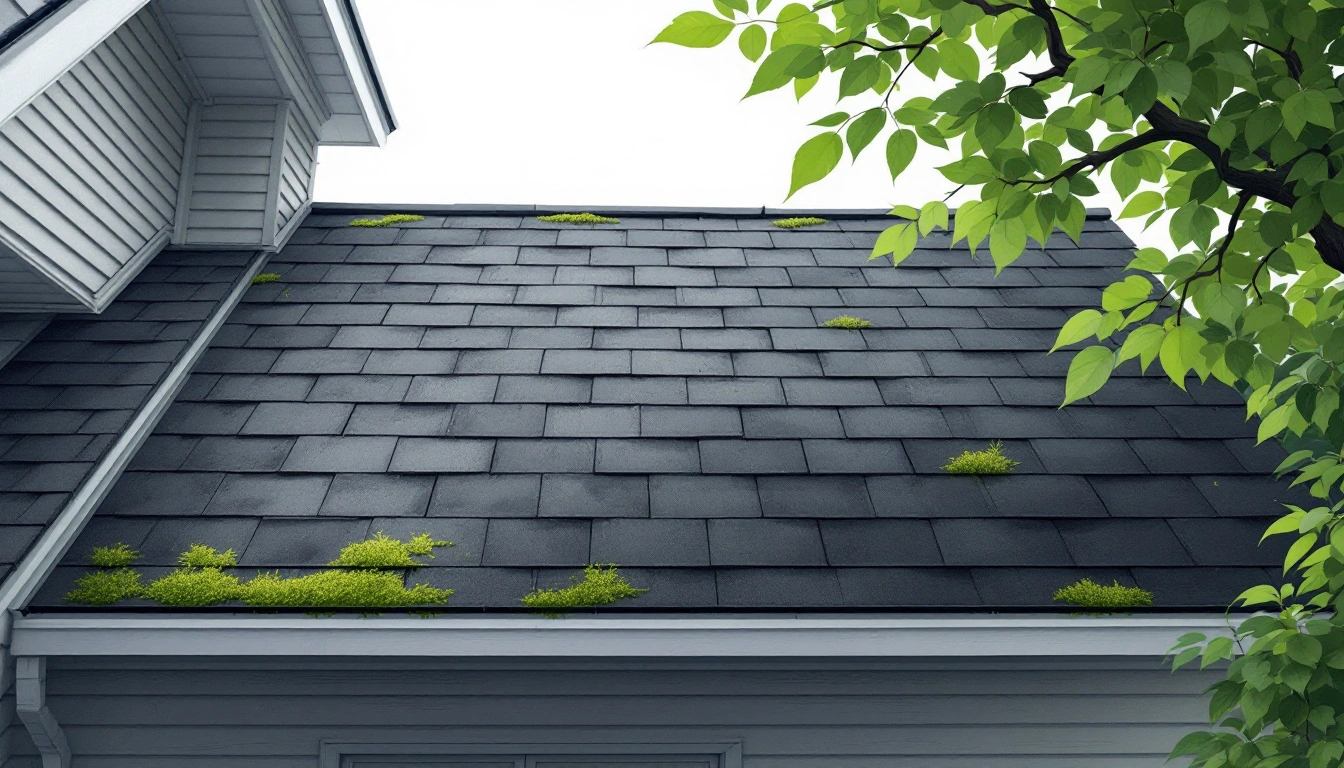
Flat dark streaks and thick green moss need different judgments. Algae is often a stain; moss can lift shingle edges and hold water. Match the treatment to the roof, then reduce shade and trapped debris. Cleaning can remove growth, but it cannot mend a worn or leaking roof.
Identify moss and algae before cleaning
Black streaks often come from Gloeocapsa magma, cyanobacteria commonly called blue-green algae. Its dark coating makes the roof look brown or black. Streaks do not prove that shingles are rotten or that the home has indoor mold.
The coating grows where the roof stays damp. North-facing slopes often stay damp longer because they get less sun, and shade from trees can do the same on other slopes.
Moss is a small plant that grows in thicker green clumps or mats. View it from the ground with binoculars. Note whether it sits at shingle edges, in valleys or beneath a branch. A pale crust stuck to the surface may be lichen. Do not scrape it off as if it were loose moss.
Oregon State University Extension's roof-moss guide, published February 2023 and reviewed in 2025, explains why changing the damp, shaded environment matters. Cleaning a shaded roof without changing those conditions leaves a good place for new growth.
What growth does to asphalt shingles
Algae staining alone is usually a question of appearance. Moss deserves more concern when it lifts edges or keeps debris wet. Water may move sideways beneath raised edges instead of draining down the roof. The covering and the wood below can then need repair as well as cleaning.
The ARMA algae and moss guidance distinguishes the two. It reports no scientific evidence of algae damage to asphalt shingles, while noting an effect on reflective roof performance. It also describes moss lifting and curling shingle edges. Do not treat every dark patch as a reason to buy a new roof.
How to remove moss from roof shingles safely
Choose the method for the actual roof
First find the shingle maker if records allow. Advice for asphalt may not suit other roof types, such as wood shakes or tile. Ask a cleaner to name the roof type and the wash and rinse method before you agree to the work. The phrase “soft wash” does not tell you those details on its own.
ARMA's asphalt guidance is the 50:50 mix of laundry-strength liquid chlorine bleach and water described above, applied with a sprayer, left 15 to 20 minutes without drying, then rinsed thoroughly at low pressure. That is equal volumes of the household product and water, not a 50% concentration of pure sodium hypochlorite.
Shingle makers publish their own recipes, and some differ from ARMA's. Follow the method approved for your shingles and the cleaner's label, and do not increase the strength for faster results.
Protect plants and control runoff
Before treatment, plan where the liquid will go. Move portable planters, then wet the plants below the treated area with clean water and cover them. Identify downspout outlets and keep cleaning runoff away from ponds and other sensitive areas. Do not begin if there is no workable way to control it.
Wear the eye and skin protection called for on the cleaner label. Never mix bleach with ammonia or acids. Do not add other cleaners unless the product's own label calls for that mix. CDC's bleach guidance, dated April 24, 2024, warns against mixing bleach with other cleaning products.
Cleaning steps
Use these steps only where the shingle maker permits ARMA's mix. ARMA gives the mix, the sprayer, the 15 to 20 minute contact time, the rule not to let it dry and the low-pressure rinse. The working position, the order and the waiting are this page's own safe practice, not ARMA's instructions.
- Wet and cover the plants below the work area, as above.
- From the ground or a secure ladder, use a low-pressure sprayer to apply equal volumes of laundry-strength liquid chlorine bleach and water. Work from the top down without stepping onto the roof. Use a crew if you cannot reach safely.
- Leave the solution for 15 to 20 minutes. Keep it from drying before rinsing.
- Rinse the roof thoroughly at low pressure, then rinse exposed plants with clean water.
- Let treated moss loosen and fall away over the following weeks. Do not scrape, pry up edges or scrub with a stiff brush. If an area looks thin or breaks apart, stop and have that section assessed before more cleaning.
- Check from the ground the next day for remaining growth and any runoff damage. This early check does not mean all moss should be gone.
Leave unsafe access to a cleaner
A wet, mossy roof is slippery. Choose a cleaning crew for steep slopes, roof access or runoff beyond your reach, and ask it to confirm a low-pressure sprayer and rinse before you agree to the work.
Prevent moss and algae from returning
Reduce shade and trapped debris
Trim overhanging branches where that can be done safely. Keep leaves and twigs from building up in roof valleys and behind roof features. Clear gutters and make sure downspouts drain as intended. Have overhead tree work and roof access handled with suitable equipment rather than reaching from a ladder.
Oregon State's guidance stresses changing the environment that allows moss to thrive. Check the dampest slope after leaves fall and after storms. A roof that stays shaded will still need care after cleaning. One wash will not prevent new growth on a damp, shaded roof.
Weigh zinc and copper strips at reroof time
Metal strips can release small amounts of metal into rainwater that washes down the roof. They are a prevention option, not a way to detach a thick moss mat. Coverage depends on where water flows.
IKO's moss-removal guide describes copper and zinc strips as a way to limit new growth, not remove existing moss. ARMA does not recommend adding zinc or copper strips to an existing asphalt roof: the work can expose nails or break shingle seals. Consider strips only at reroof time. Discuss the detail within the roof replacement process, rather than lifting sealed tabs for a casual retrofit.
Understand algae-resistant shingles
Algae-resistant, or AR, shingles use materials such as copper-bearing granules to limit staining. This does not make a roof immune to moss, debris or leaks. If replacement is already needed, compare that protection with the actual shade and moisture on the home. Do not replace sound shingles just to conceal a removable stain.
Verdict: separate moss from roof damage
To decide how to remove moss from roof shingles, separate growth from damage. Gentle cleaning may suit sound shingles. Lifted edges, breaks, recurring leaks or damaged decking need repair decisions too. Read how long a roof lasts for age and condition checks, then use roof repair vs replacement to weigh the extent of work. A clean surface does not prove the layers beneath it are sound.
Quick answers
Can I pressure wash moss off asphalt shingles?
No. ARMA says never to use a pressure washer on an asphalt shingle roof. A gentle low-pressure rinse is different from a high-pressure jet. Let treated moss fall away over the following weeks instead.
What bleach ratio does ARMA recommend?
ARMA describes equal parts laundry-strength liquid chlorine bleach and water, with 15 to 20 minutes of contact before a thorough low-pressure rinse. This is not a recipe for pool-strength concentrate. Check the shingle maker's method and the cleaner label first, because manufacturer guidance can differ.
Are black roof streaks the same as moss?
No. Flat dark streaks often come from blue-green algae called Gloeocapsa magma. Moss forms thicker green growth that can hold moisture and lift shingle edges. Color alone cannot identify every stain, so look at the growth's shape and the roof's condition before deciding how to clean it.
Will copper or zinc strips remove existing moss?
Do not count on strips to remove an established mat. ARMA does not recommend adding zinc or copper strips to an existing asphalt roof. Consider them only when replacing the roof; retrofitting can leave exposed nails or break shingle seals. Shade, debris and moisture still need attention even where strips are fitted.
Does moss mean the roof needs replacing?
Moss alone does not prove that the whole roof has failed. Check for lifted or broken shingles, leaks and deck damage. Cleaning cannot repair those faults. If the rest of the roof is sound, cleaning and a local repair may be enough; widespread wear calls for a separate replacement assessment.